
Great Loop Route Overview →
New Jersey & New York
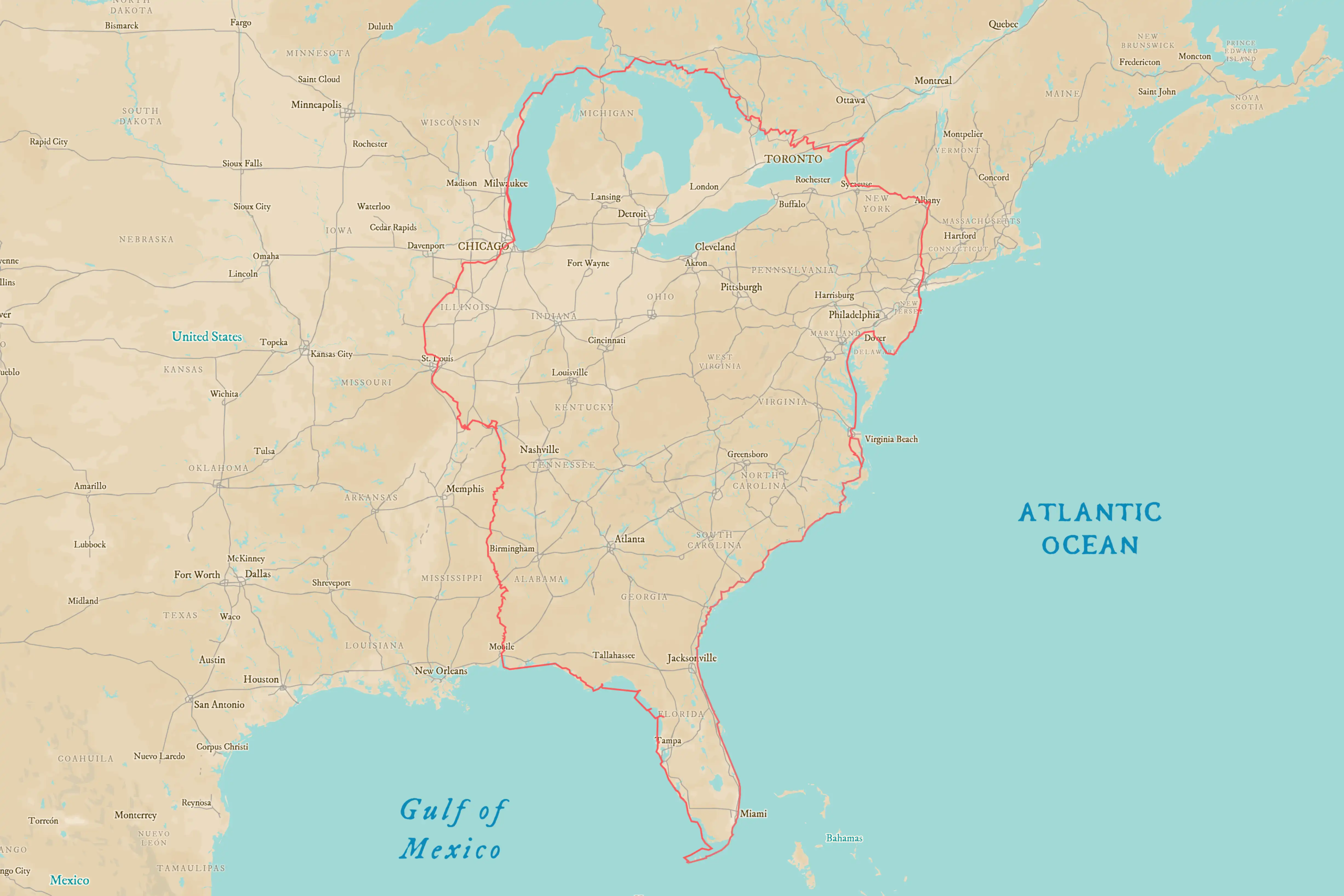
Loopers leave the Delaware Bay at Cape May, New Jersey. From this point, Loopers can cruise to the New York Harbor via the New Jersey ICW or out in the open ocean. After reaching New York, Loopers will travel the Hudson River to the eastern Erie Canal, before making their way to Lake Ontario.

New Jersey Intracoastal Waterway
— 117 miles
The protected passage of the New Jersey Intracoastal Waterway (NJICW) runs from Cape May to the Manasquan Inlet. The NJICW is notorious for shoaling and fluctuating depths, meaning it’s best traveled during a higher tide.
Alternate Route
Loopers can opt to take the “outside” route and travel the length of New Jersey in the Atlantic Ocean, or a combination of both routes.

Atlantic Ocean
— 15 miles
Venturing out into the second largest ocean in the world, the Atlantic Ocean ,is the only option for Loopers leaving the NJICW and heading into the New York Harbor. A good weather window is a necessity for this section. As Loopers round Sandy Hook, NJ they’ll get their first glimpse of the New York City Skyline.
Plan to arrive here with a buddy boat and have your Loop boat photographed in front of the Statue of Liberty!

New York Harbor
— 10 miles
The Upper and Lower New York Bays form the New York Harbor. This brackish harbor is one of the worlds largest, and busiest, natural harbors, and Loopers’ departure from salt water and entry into the Narrows and ultimately the Hudson River.
Try not to be too awe-struck during this section, as navigating the currents, ferries, and heavy commercial traffic can be a challenge. Loopers can take advantage of the ferries and land-based public transportation to visit the burroughs of New York City.

Hudson River
— 170 miles
The Hudson River is a deep fjord begining in the north in the Adirondack Mountains. The river flows from north to south, meaning most Loopers will continuously be fighting the river’s current. The deepest part of the Hudson River is over 200 feet deep, and is known as “World’s End.”
Traditionally, Loopers leave the Hudson River near Albany, NY to head west on the Erie Canal to the Great Lakes.

Erie Canal
— 160 miles
The historic Erie Canal rises over 500 feet over its length, via a series of locks and dams. Most Loopers travel only the eastern canal through Lake Oneida, before connecting with the Oswego Canal and Lake Ontario.
Alternate RouteS
Instead of heading west on the Erie Canal, continue north on the Hudson River to Lake Champlain, Vermont.

Oswego Canal
— 23.7 miles
The Oswego Canal connects the Erie Canal to Lake Ontario at Three Rivers, NY. The canal is dredged to 14 feet, and gaines 118 feet in elevation over 7 locks and dams. Before leaving the canal, and entering Lake Ontario, Loopers will need to wait for a good weather window.
Alternate RouteS
If you’d like your Loop to stay in the U.S., continue west on the Erie Canal, which terminates at Lake Erie, instead of entering Lake Ontario.
Great Loop Route & Waterways
Route Overview →
Leave a Reply