A Wild and Enchanting Experience!
This was one stop on the Great Loop that we definitely couldn’t miss! And the best part is we anchored right by the national seashore – it was yet another bucket-list anchorage for the Great Loop.
We begun our day at Cumberland Island from the Dungeness dock. From there we peeked in the Icehouse Museum before beginning our stroll through the canopy of Spanish moss-adorned live oaks. We followed the Beach Creek Trail to the Saltwater Marsh Boardwalk, and stopped to watch the feral horses far off in the marsh. We arrived there at low tide, and got to witness the salt marsh exposed. Cumberland Island experiences over six foot tidal changes every six hours, which means the shoreline appears to change almost constantly.
Video Transcript
In this video we’re picking up where we left off last week. Last time we had a short cruise day and arrived at Cumberland Island early. So we set the anchor, dropped the dinghy and headed to Cumberland Island to get some hiking in.
Oh, a wood stork! Did you know that adult wood storks are practically mute because they don’t have a fully developed voice box?
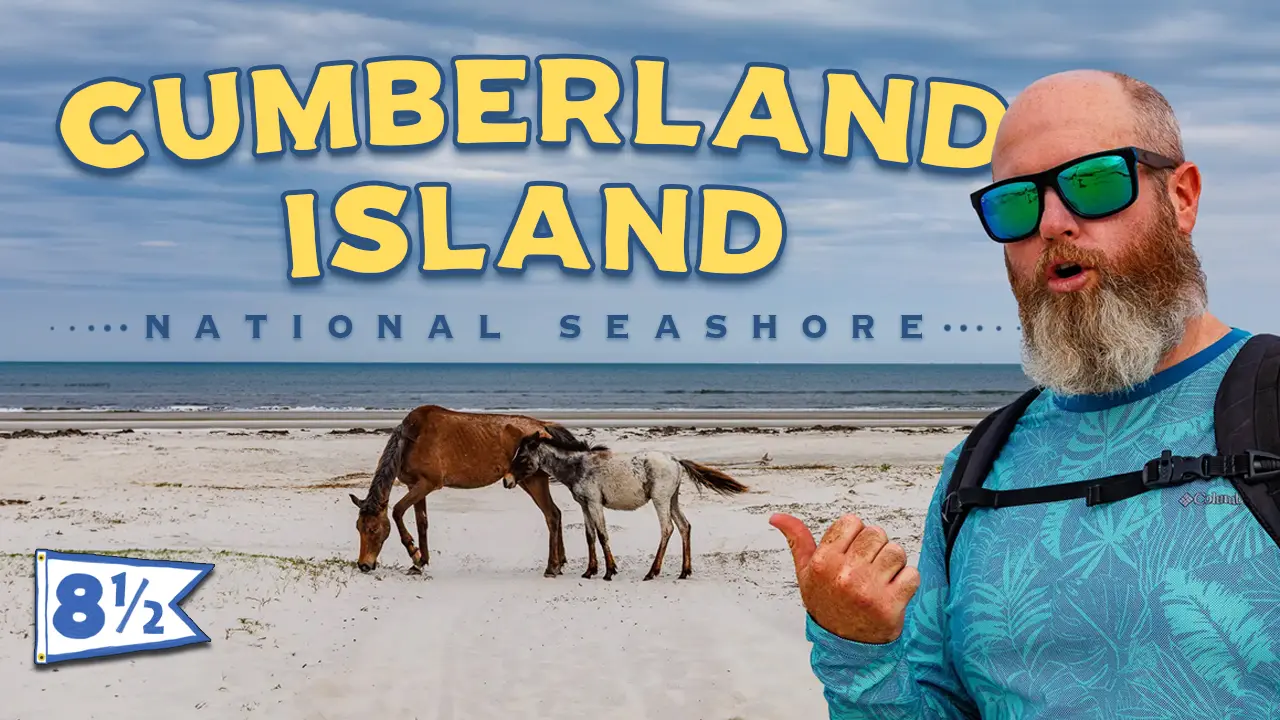
These are the feral horses of Cumberland Island National Seashore. The feral horses of Cumberland Island are one of seven feral horse herds on U.S. barrier islands, but they’re the only herd of feral horses on the Atlantic coast that is not managed. So nobody is providing them with food, water, veterinary care or doing any sort of population control.
Population surveys estimate that there are about 150 to 200 feral horses on the island and genetic studies that have been conducted by local universities have determined that the feral horses on Cumberland Island are a mix of Tennessee Walkers, American Quarter Horses, Arabians and Paso Fino. They are considered feral animals as opposed to wild animals because feral animals have been previously domesticated but have reverted to the wild state and adjusted to surviving in a natural environment without the help or support of humans.
Since the herds of Cumberland Island are not managed, they’re affected by all the natural stressors faced by the native wildlife and this leaves their lifespan to be only a third or a quarter of a domesticated horse. Researchers concerned with environmental issues on Cumberland Island are concerned with the population size of the feral horses. Given how much vegetation they need to consume in order to survive, they can be pretty destructive to native vegetation. But other researchers looking at genetic variability say that the horses need to be in a herd of this size in order to prevent inbreeding. So there’s kind of a little bit of debate going on whether they should do any sort of herd reduction or relocation. There’s also cultural and economic reasons to keep the horses there because now the feral horses are associated with Cumberland Island and so they bring a lot of tourism. The most important thing to remember for me is that the feral horses have the right of way. So make sure you give way.
We had begun our day at Cumberland Island from the Dungeness Dock. From there we peeked in the Ice House Museum before beginning our stroll through the canopy of Spanish moss adorned live oaks. We walked through the duck pond to Dungeness Ruins and from there we followed the main dirt road to other historic buildings including the laundry and carriage houses. But it was still hard to imagine that someone ever owned all the beauty on this island.
We followed the Beach Creek Trail to the Saltwater Marsh Boardwalk and stopped to watch the feral horses far off in the marsh. We arrived there at low tide and got to witness the salt marsh fully exposed. Cumberland Island experiences over six foot tidal changes every six hours which means the shoreline appears to change almost constantly.
From there we decided to take a trail through the dune fields to Dungeness Beach, the furthest west point on the east coast shoreline. It’s rare to find an undeveloped beach on the east coast these days but Georgia conservationists have worked hard to keep their beaches wild and that’s a reason why Georgia’s barrier islands are known as the Golden Isles.
Cumberland Island is Georgia’s largest and southernmost barrier island. It’s 17 and a half miles long and totals over 36,000 acres, 46 percent of which are marsh mud flats and tidal creeks. The island is only accessible by boat and is one of three national seashores directly on the Great Loop route along the intercoastal waterway. Not too far south is Canaveral National Seashore and the Gulf Islands National Seashore is located in Florida’s Panhandle near Pensacola.
After walking through the dunes we finally arrived at Dungeness Beach and the Atlantic Ocean. A lot of people we meet and chat with think we’ve been in the Atlantic Ocean this whole time but really we’ve been safely tucked in the intercoastal waterway. It reminds me of the PCT. A lot of people seem to think it’s the Pacific Coast Trail along the ocean but really it’s the Pacific Crest Trail along the mountain ridges.
We were living the dream. We walked to the beach for a moment feeling like part of the herd but dark clouds turned our attention to the sky and we agreed that it was time to start heading back before the imminent storm even though one wasn’t predicted for today.
Cumberland Island has been absolutely amazing. We’ve seen everything that we wanted to see and more. Tons of horses of course, armadillos, we’ve seen some skinks, we saw a yellow-crowned night heron that was cool, alligator, ibis, all kinds of great things. Not only were there tons of animals but all the hiking – absolutely amazing. From little boardwalks to sandy dunes to marsh flats. It’s been amazing.
We’re on the east side of the island now making our way back and I’ve already put in 11,000 steps so getting our steps in today which is good because when we’re on the boat, we can’t really walk too much so it’s really nice to get out. It’s our first long day of hiking in a while so it was awesome getting here early anchoring and coming right to the island.
As we walked back through the interdune meadows and the maritime forest the winds really started picking up. When we arrived at the dinghy dock our dinghy was actually thrashing against the line and bashing against the wooden dock and busted one of the navigational lights. When we got back to Swamp Puppy the winds were blowing even harder so we decided to scoot just a little bit further north for a more protected anchorage.
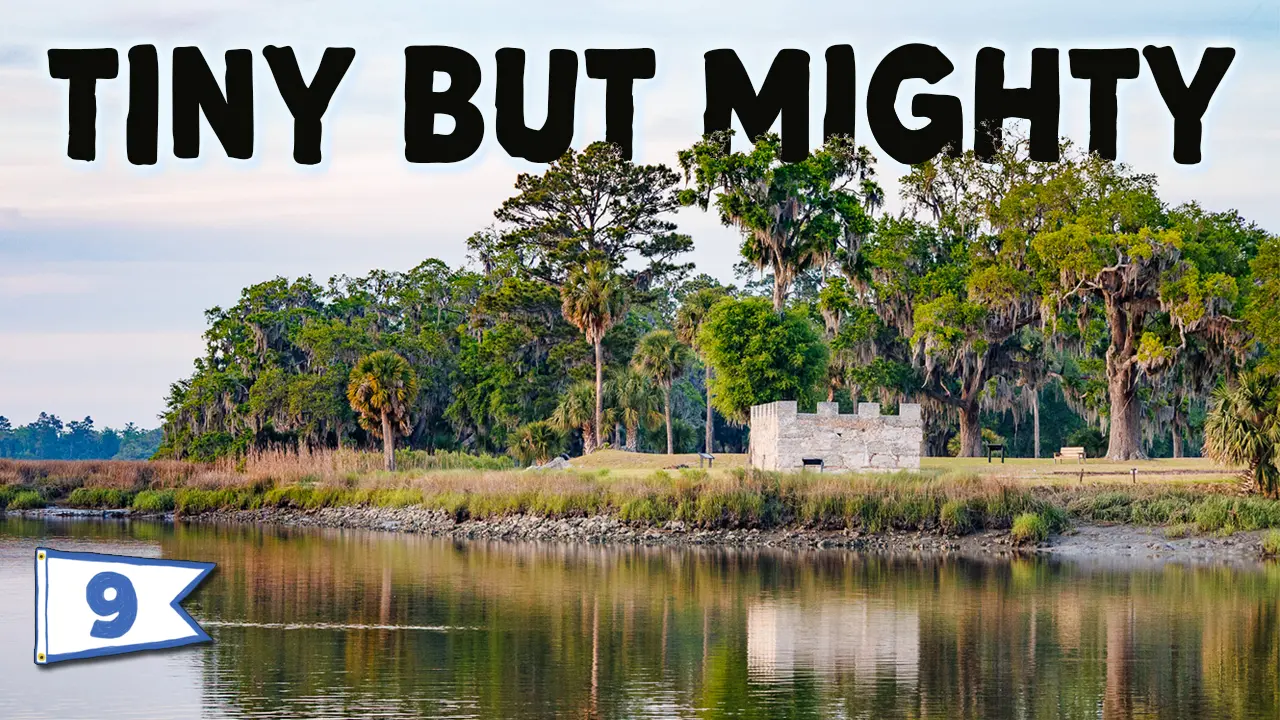
We ended yet another great day on the great loop like we normally do by watching the sun go down together. Thank you so much for watching this video. Please take a minute to like and subscribe if you’re not already. Ring the bell for notifications and we’ll see you next time at Fort Frederica National Monument. Thanks for watching!
Video Chapters
- 00:00 – Last Time on the Great Loop
- 00:11 – Landing on Cumberland Island National Seashore
- 00:20 – We Spot the Wild Horses Already!
- 00:48 – Two White Ibis in a Spanish moss-covered Tree
- 01:03 – A Bright Red Northern Cardinal
- 01:13 – Tom Balancing on the Duck Pond Wall
- 01:23 – A Black Vulture Drinking from the Pond
- 01:47 – Exploring the Dungeness Ruins of Cumberland Island
- 02:00 – A Banded Armadillo Sighting
- 02:38 – Wild Horses Grazing in the Marsh
- 03:15 – Elyse Gives Background on the Feral Horses
- 03:34 – There are 150-200 horses on Cumberland Island
- 04:03 – The Fiddler Crab Army
- 04:23 – Swamp Puppy Anchored in Front of a Wild Horse
- 05:08 – The Horses Have the Right of Way
- 05:18 – A Yellow-crowned Night Heron
- 05:24 – Elyse Provides an Overview of Our Visit
- 05:50 – Island Marshes at Low Tide
- 06:10 – Dungeness Beach: The Furthest West Point on the East Coast
- 06:30 – It’s One of Three National Seashores on the Great Loop ICW
- 06:49 – Wild Horses on Dungeness Beach
- 07:09 – We Are Living the Dream
- 07:12 – A 5-Lined Skink
- 07:22 – Tom Gives Feedback on our Day at Cumberland Island
- 08:15 – The Winds Really Picked Up
- 08:25 – We’re Moving to a Different Anchorage
- 08:35 – Sunset at Cumberland Island National Seashore
- 08:45 – Thank you so much for watching!
Leave a Reply